Introduction
Life has been good, if a bit dull since defeating Tchernobog. However, recent news regarding mysterious disappearances around a remote town in Tennessee, called Willard, has piqued Caleb’s interest for an investigation. That place was once prosperous, but has since been abandoned and could make a perfect hiding place for the Cabal to start over.
Review
When a horror story trusts their participant’s patience, it can take an opportunity to move along at a crawl before revealing what lies beyond the curtain, establishing an eerie calm gradually falling more and more into madness. WILLARD is unlike a typical BLOOD experience, made clear early on where action doesn’t hog all the spotlight. Instead there are long bouts of breathing space for soaking up your surroundings and enjoying a more contemplative side to exploration. The overarching setting becomes a character of its own upon discovering it has indeed become a ghost town. Corpses are scattered about as if they had once been running scared from the direction you intend to follow; a lingering red mist barricades choice paths, consuming life from anyone coming into contact; and an occasional disembodied voice is heard whilst wandering the otherwise empty streets. Every little hint eludes to a bigger mystery just waiting to be unravelled.
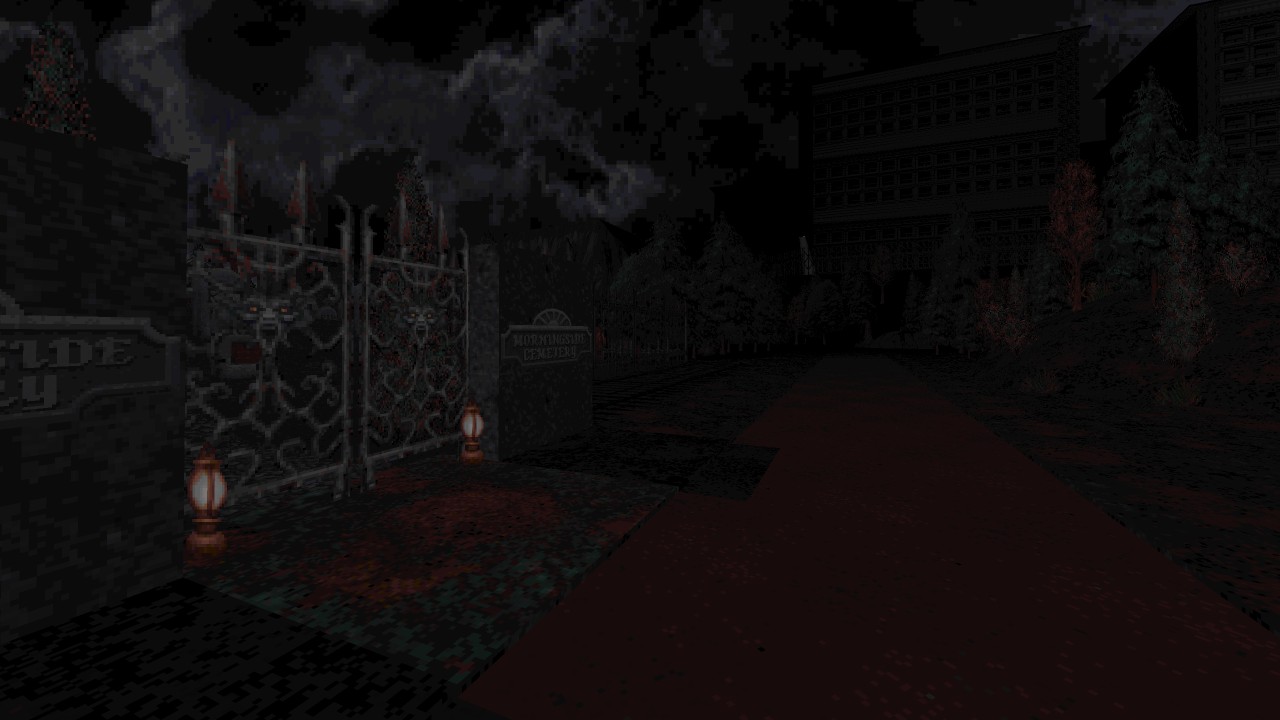
Having come across this release at a time I was looking for something more laid back to play, WILLARD really clicked with me as it leaned more into the adventure genre and had this compelling slow burn pacing whilst its narrative beats unfold. Unconventional levels have also always been a curiosity to me, especially when they reframe the game to adhere to a style it wasn’t built for. I could sense Bloodskar having confidence behind their vision despite these departures from regular gameplay. In turn this made me reflect back on my own BLOOD project where I had made unnecessary compromises all in fear of player boredom, prioritising standard combat setups rather than fulfilling a long form mystery centred around puzzle solving. Sometimes taking that risk to expose an alternative direction for whichever game we’ve become so familiar with is worth reigniting that imagination, therefore I respect seeing this opportunity exploited to define WILLARD within its own niche.
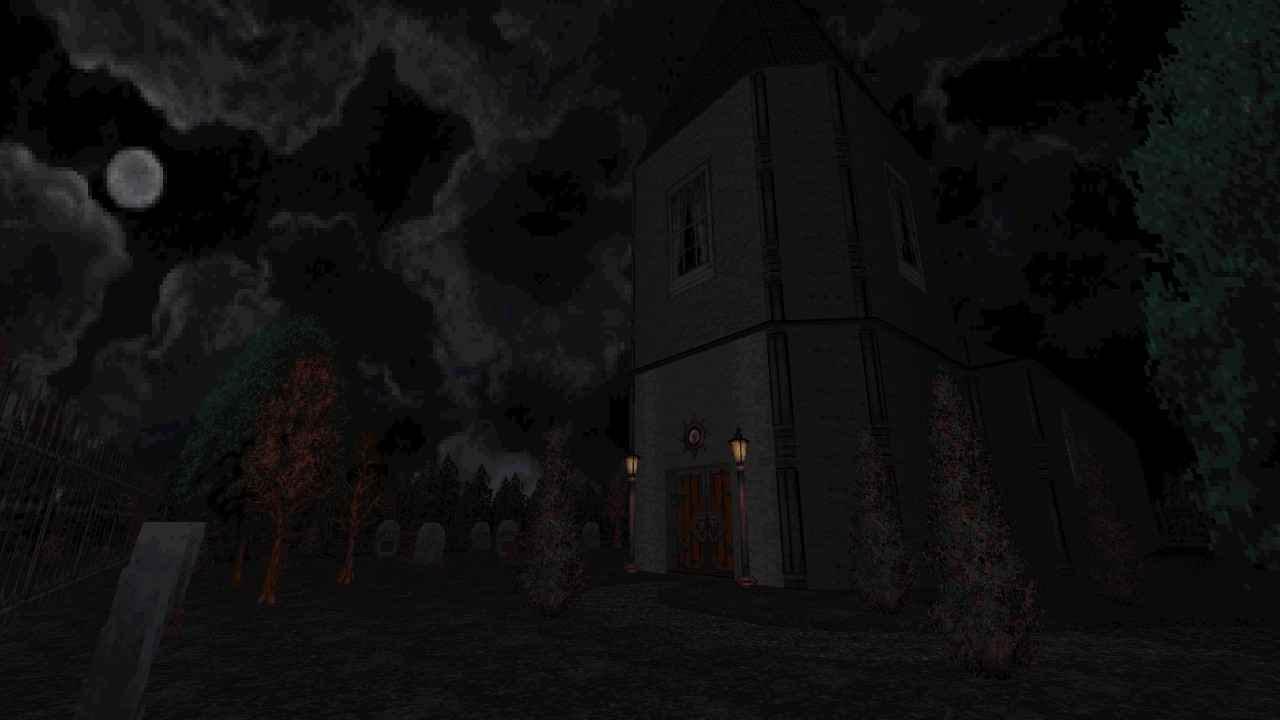
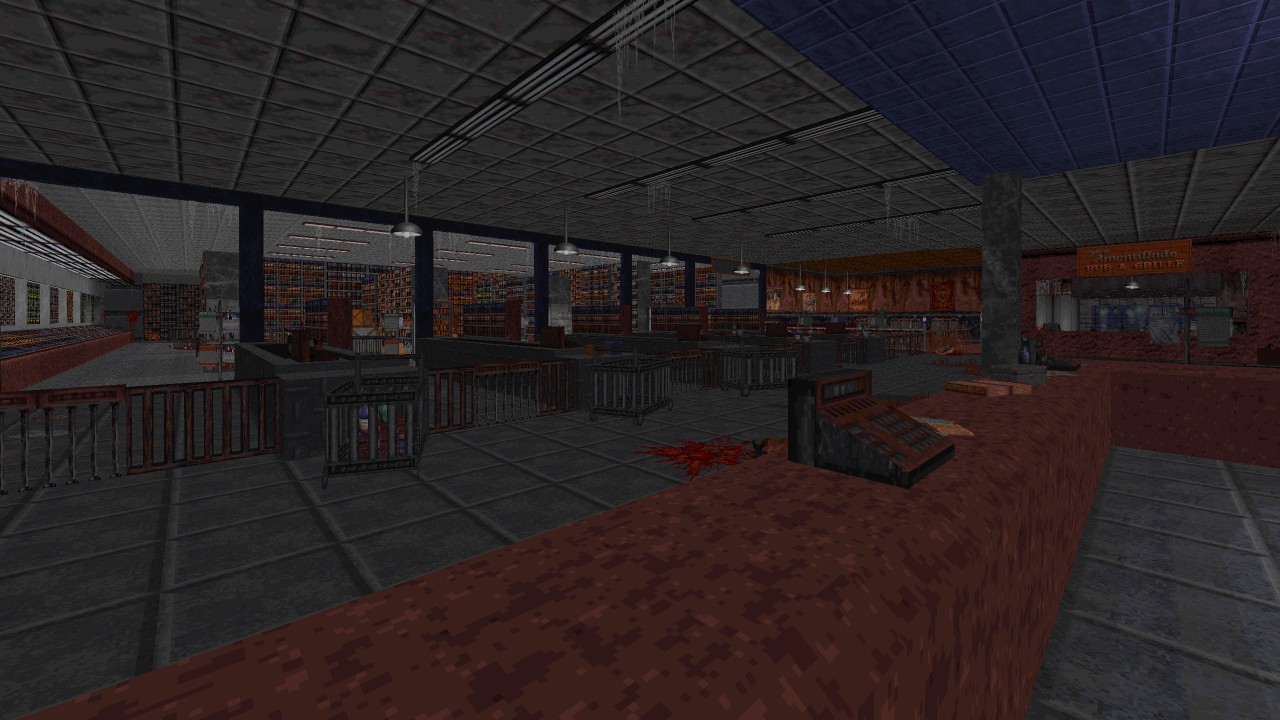
There are six varied levels that make up the campaign, all centred around a vast wetland region with winding roads passing through deep forests. Each one then remains focused upon specific locations without meandering too far from those choice concepts. Places such as Pascow’s Grocery or Willard Public Library are then interspersed as interior points of interest to break up all the outdoor travel. While some levels might operate well enough as self contained vignettes, they function better when considered as a seamless whole where an ending of one leads directly into the start of the next, structured not too unlike a campaign for HALF LIFE. In fact, I was often reminded of Manke’s THEY HUNGER trilogy due to several reasons, from sharing pulpy horror and occult themes involving the undead, to their very introductory segments having a heavy case of deja vu. Both would have you arriving by car when forced to halt the road trip somewhere near to a graveyard. From there a path leads up to an isolated church holding a necessary item to proceed onwards. Their journeys then involve trekking through natural landscapes and rural locales to reach some form of civilised territory, only to find the worst case scenario has already occurred. Whether by coincidence or as a source of inspiration, despite these similarities feeling a little on the nose as WILLARD offered a familiar taste, I much preferred the shorter run time here. Bloodskar chopped away any excess fat, leaving behind just enough to chew on for more effective pacing between moments that mattered most, while not undermining the macabre and lonesome dread it carefully builds up until then.
WILLARD is a linear experience through and through that is very much married to the narrative it wishes to tell and likes keeping a tight leash on your whereabouts. While traditional key hunting and some hectic combat encounters are still part of the process, their mechanical roles serve as breadcrumbs toward story milestones. Any detours otherwise are limited to fetching hidden items, such as those thrown onto rooftops, or taking up a side goal to unlock the gun store for its haul of munitions. Getting lost should then be out of the question as your route has already been decided, guided along by an invisible hand, nor are there any puzzles to stumble over. The later swamp level venturing into nearby woodlands might however attempt to throw you off balance, all while under threat of zombies unearthing themselves at every step, this purposeful disorientation worked well to imbue panic to avoid being chopped from your flank. However there were only two occurrences that halted momentum during the latter leg of my journey, if only for a brief time, all because I didn’t see the required switches. The first was inside a boiler room not realising there were two switches, that then must be pulled in order before the other is operable. My second issue was not understanding where the crypt key was supposed to be located, feeling perhaps I’d missed a detail along the way, if not for stumbling over another set of switches in the sawmill blending amongst the details.
Even though I found that level progression skirts on the simpler side, that’s not to imply the campaign was lacking in either capacity, playing well into its strengths with an emphasis on atmosphere and weaving narrative details into the environment. Effective use of sound and ambience function in parallel to the current situation almost like a rising heartbeat. These alongside various surprise twists through scripted sequences help to shake up the campaign. One of my favourite scenes occurs early on after a period of downtime, excellently executed when that dreaded sight hammers home the stakes. Other examples tend to involve enemy ambushes, from classics like doors shutting behind you, to unassuming corpses being more dangerous than they appear. There’s even a forklift barrelling down the warehouse aisle you’re forced to leap away from, only for its driver to exit and finish the job himself. Some presence out there really wants you dead and this soon becomes apparent once pitted up against overwhelming odds, all too understandable how victims prior to your arrival succumbed to the horrors lurking here. While opposition often relies by attacking with heavy numbers, you have the firearms to dish out equal carnage and it’s quite cathartic tossing dynamite into large crowds of zombies, but must still take care not to step on any roaming hands while keeping your distance from Hellhounds in pursuit. Combat across WILLARD exists to add flavour to the scenario at hand rather than pose a challenge, they’re all setup like a well rehearsed stage play with no incidental encounters to interrupt the main actors.
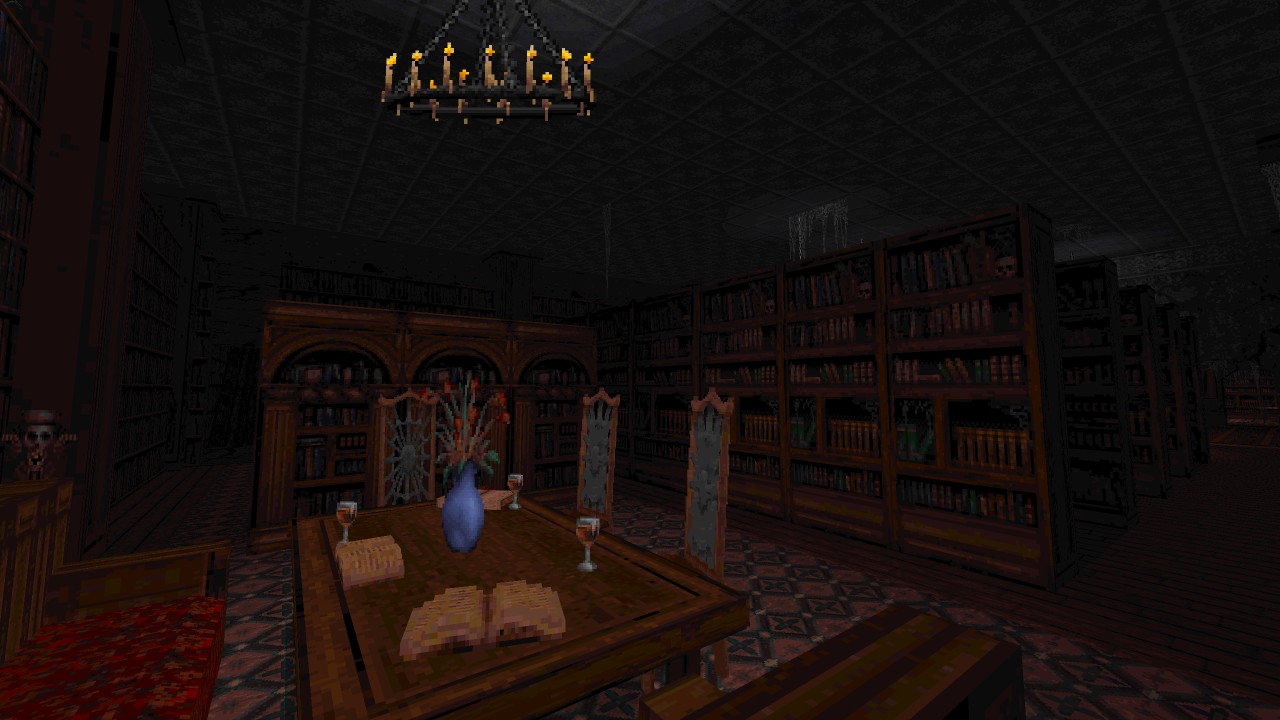
Your top priority during the campaign instead leans toward learning what happened here and preventing this from spreading beyond Willard’s borders. Scattered notes and diary entries can be found along the way, short bursts of writing bringing attention to people caught up in the aftermath, actions leading up to current events, or clues on how to proceed forward. I appreciate these didn’t bog the experience down with too many pauses, just enough words between levels to paint a picture leaving what you see to do the rest. Beyond reading through documents and getting into prompted scuffles, there sadly wasn’t much in the way of interactivity outside of those. Some light puzzle solving, perhaps navigational and causing more shifts to level terrain by your own hand might have obscured that tight leash around your neck. Therefore it was all more important that design holds up well alongside those immersive wanderings that made up the bulk of engagement.
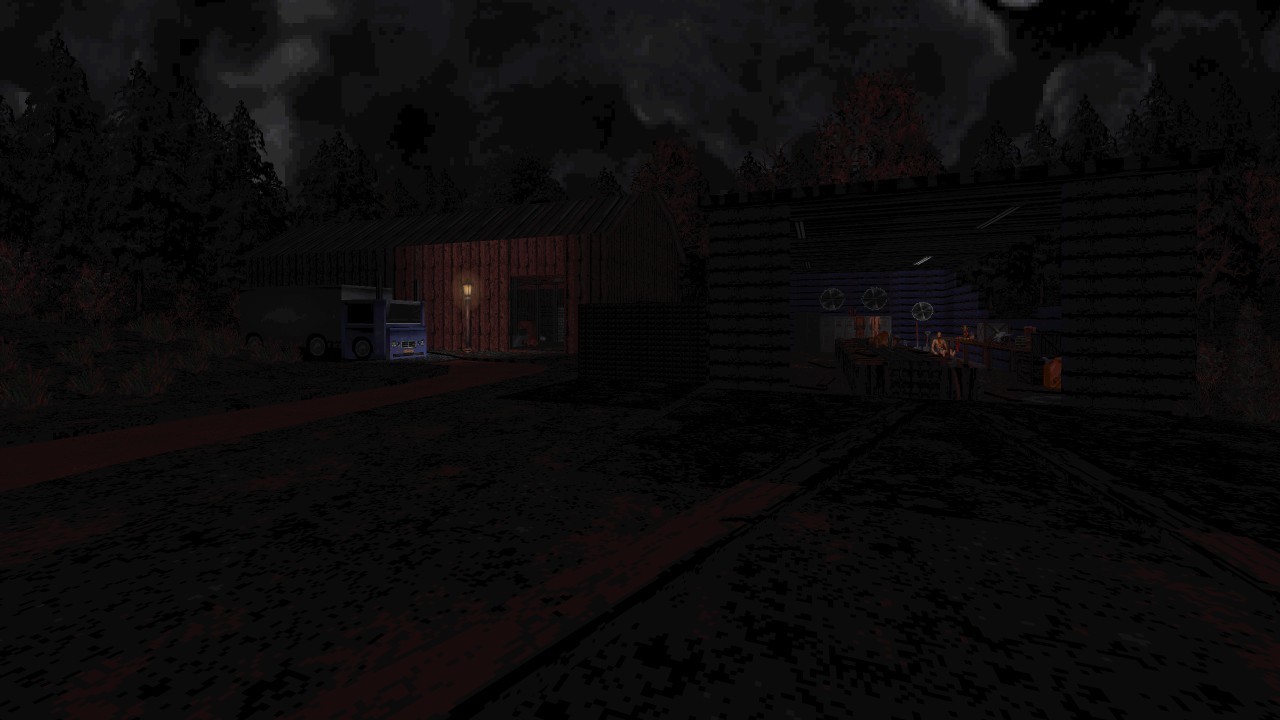
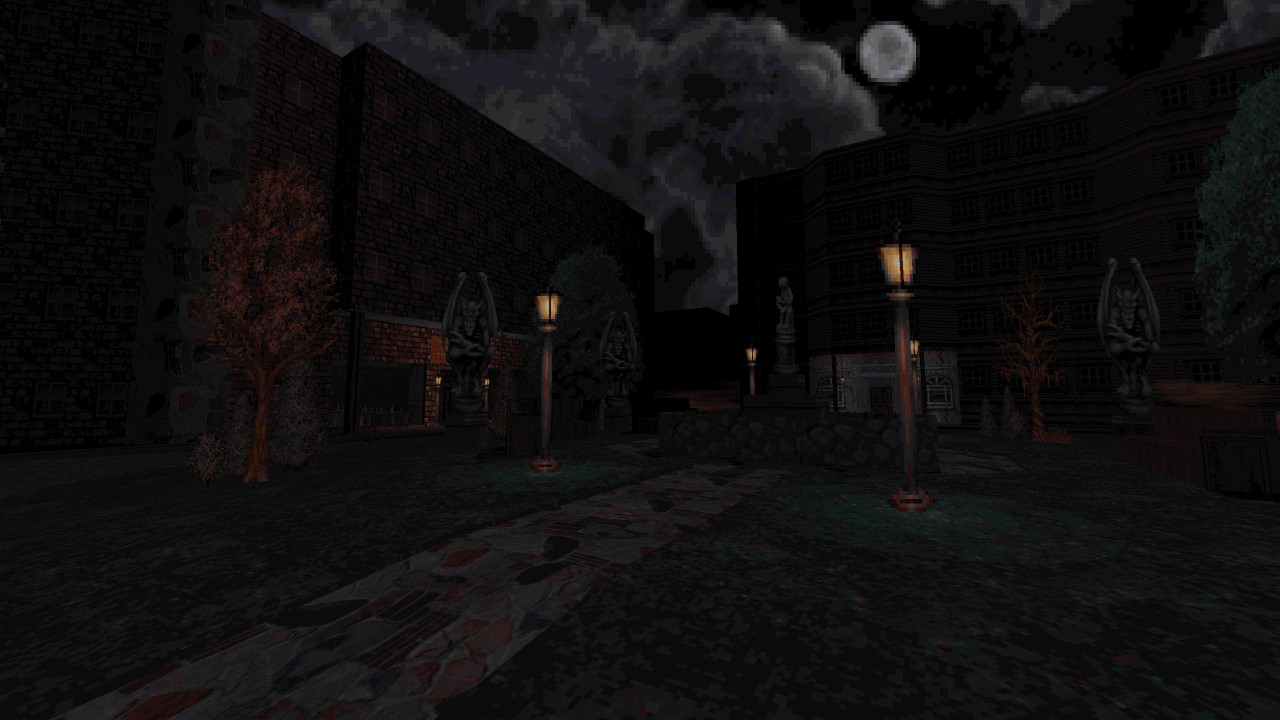
Bloodskar takes full advantage of stock assets and NBLOOD’s extended features to pull off a great visual identity, targeting realism for structural aesthetics and grounded blueprints. Meanwhile landscaping appears naturally varied from terrain inclines, steep rock walls and small mounds, to swampy ponds and a river waterfall. These sights in combination with ambient sounds such as night creatures, a droning wind and drips echoing through road tunnels ties things together that drew me into this world. There was always a weight pressing down as if something could be watching your every move among the trees and shadows. Despite how eerie it may seem, not far off in the distance apartment buildings are perched just out of reach, a mild comfort knowing that civilisation might be close at hand. Every direction you turn there’s a suitable attention to detail to occupy those spaces, applying lots of decorative clutter to appear loud and lived in, as if people once went about their day to day business yet were interrupted at some point. Perusing these sights was an enjoyable enough task alone simply seeing how BLOOD’s assets had been utilised to fulfil certain looks and fixtures, while the odd custom texture is added to cover gaps such as vehicles. Interiors are densely packed too with many expected furnishings almost to a fault, at times interfering with movement during gameplay, slipping and sliding off the details as I’m trying to keep on my toes during a fight. I’d even see enemies themselves getting caught up and bouncing rapidly in some of the tighter sprite constructions. This doesn’t become a major deal breaker for me as WILLARD still remained slower paced, the majority of fighting taking place around open spaces primarily against melee foes, but was still a notable blemish in places like the grocer or cottage when having pieces of decoration snag me and then taking punishment for that.
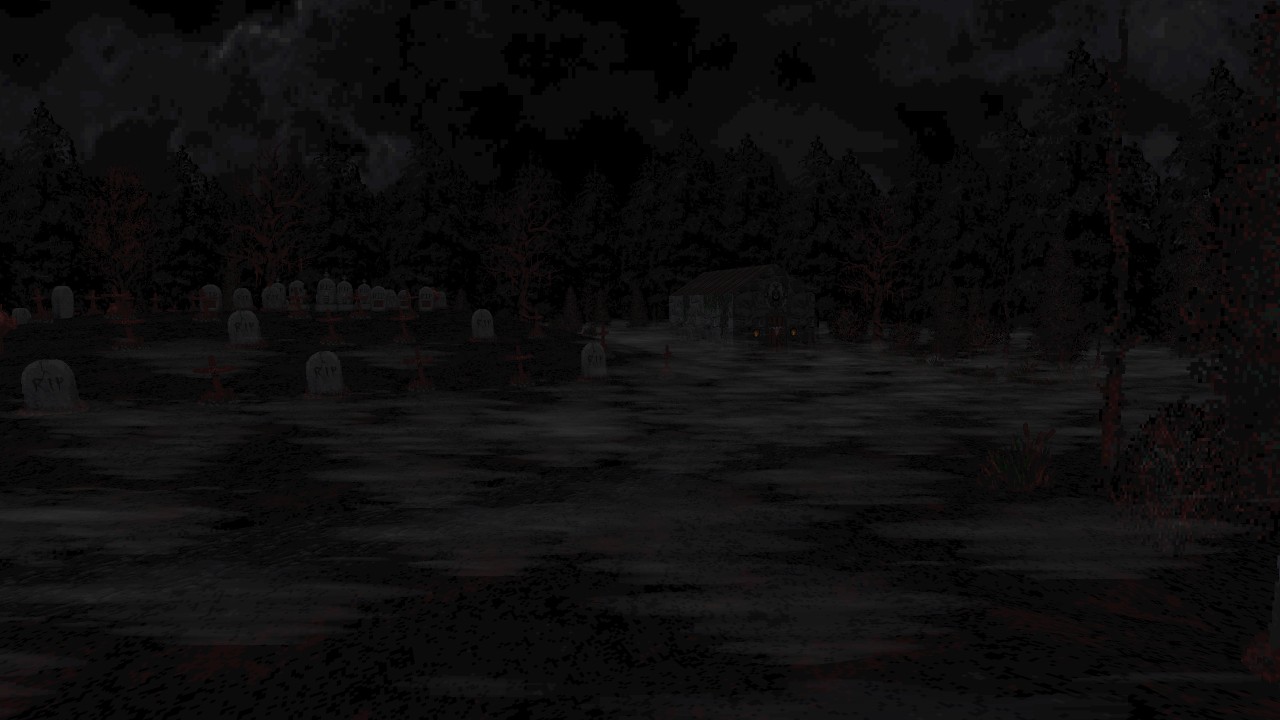
Of curious note in terms of design tying back into gameplay is how vast these areas manage to appear, without then relying on abrupt invisible walls to keep you boxed into the intended zones. Creative use around limitations can compliment a setting and its world building. I’m reminded of the first SILENT HILL which used fog to hide draw distance problems, then becoming an iconic flavour for that series going forward. Bloodskar’s solutions here also invokes a similar bond. The first notable barricade is a convincingly dense forest made up using dozens upon dozens of tree sprites, so that walking into an invisible wall by this point makes sense, as if Caleb chooses not to lose his way should you attempt passage. It’s not perfect but addressed well enough with intent, though part of me wishes these routes could be taken regardless only to emerge back the way you came, perhaps using silent teleport trickery almost as if you’re no longer capable of leaving for whatever reason. The second barricade is the aforementioned red mist positioned along routes where trees simply wouldn’t make any sense, solving another similar problem while being tied into the bigger picture, presenting a dangerous hazard for anyone should the warnings be ignored and an intrigue as to its source.
Fever Dream
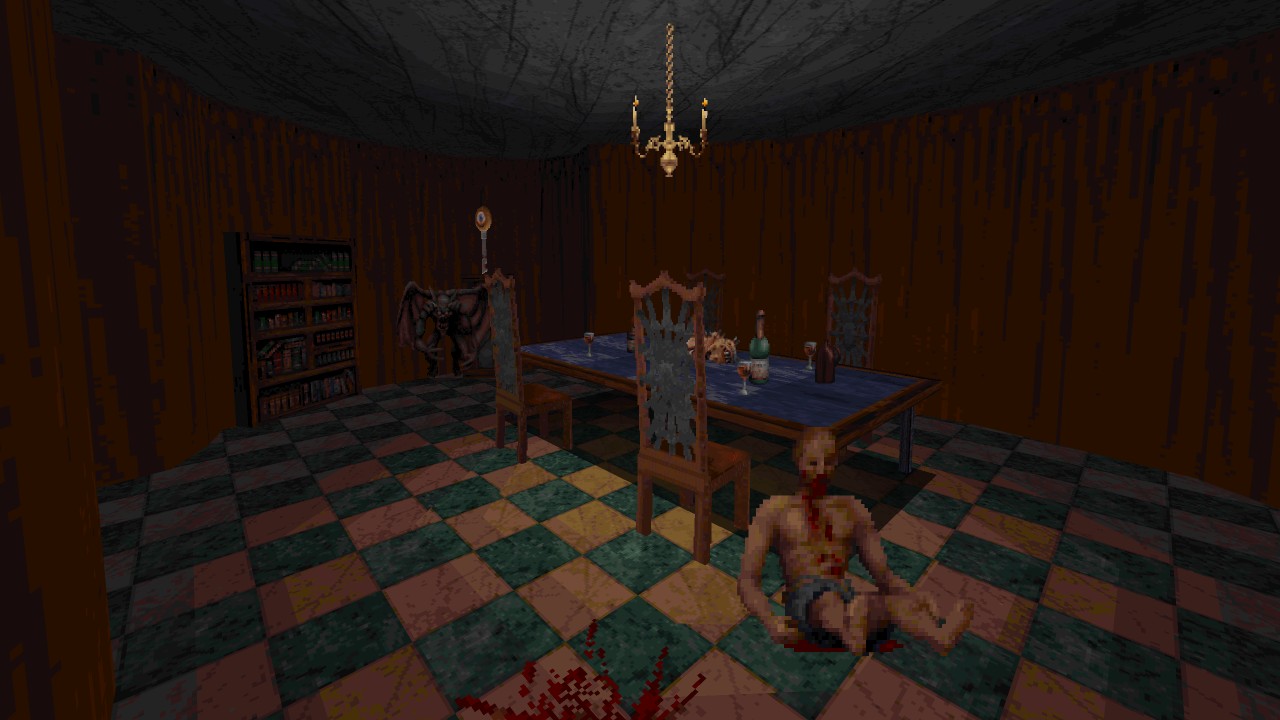
From the episode selection, this is an extra standalone map based around locales presented during the main campaign, only twisted and warped beyond familiarity, incoherently chained together to further establish a dream logic. The deeper you slumber, the feverishness grows wilder as less and less make any sense. Demands are made, scenes are played out and strange sights can be witnessed. It’s a surreal visual spectacle that doesn’t fit with the other levels, but does make for a curious addition. Part of the joy is seeing how similar set pieces are utilised in different ways, meshing alongside many new instances such as a hospital ward and possible iterations of the Twin Peak curtain room. I’d imagine this is what happens to Caleb if he were to fail and be overtaken by the red mist. Perhaps everyone in town are going through a similar hell as they shamble about as undead puppets.
Conclusion
It took me a good while to cover this one having played a prior version I enjoyed, only to find a new update come out in the midst of writing my thoughts. Version 1.5 included small changes to earlier levels and slotted a new one in-between. This had me worried the quiet pacing leading up to my favourite moment would be diminished in some way. Updates like this always have me concerned, so it was evident I needed to come back another time to the latest release without too much bias clouding any judgement. I’m glad to say those worries ended up overstated, while yes the dynamic shifted from a sudden tide toward more of a propagating threat, the narrative pacing still remained intact. That and Pascow’s Grocery was a nice addition.
WILLARD is the type of work I like that pushes the right buttons for many reasons, a departure from the source gameplay, great visual design that suits this style and a showcase of mapping prowess in general. Sometimes it’s just nice to lean back to enjoy something with an emphasis on narrative, even should it be linear, to break up levels that lean heavier on the action. Soaking up the atmosphere and taking my sweet time just browsing the many decorative elements had me immersed early on. Action wasn’t the main attraction but blowing up swarming hordes of zombies in the streets was also a highlight. New bosses are introduced at pivotal points to shy away from the usual suspects, the best found during the finale constructed out of sectors. The only shame was a lack of puzzles perhaps in connection to the initial investigation hook, but that’s simply personal preference having compared this to the adventure genre. However even without those, WILLARD as a whole kept me engaged to play during a single sitting both times.