Introduction
Uncover the mysteries across two maps, a labyrinthine puzzle adventure set inside a big stone castle soaked in blood. Inspired by The Witness and UFO 50‘s Barbuta, over twenty puzzles to be solved all created within the limits of the vanilla DOOM format.
Review
I’ve not been aware of many DOOM releases having dedicated their entire concepts around puzzle solving, especially while built with vanilla constraints in mind. This along with my own lack of experience mapping under the classic format, it can be tough to visualise making a puzzle level without relying on features from extended formats, such as BOOM, to pull off the necessary mechanics pulling all the strings in the background. BLOODSTONE becomes all the more captivating to me having stuck by these limitations, two levels involving thoughtful puzzle design based around careful observation, applying clues and discoveries as vital stepping stones for making progress. While logical tasks are limited, there are no timed challenges or precise platforming sections providing breathing room to pace yourself as needed. Resources also remain infinite to prevent the usual softlocks when using tools. Execution of sequences is then a simple application of the knowledge attained, answers behaving more akin to keys unlocking barriers, since those answers alone are usually enough to proceed without further interpretation for most cases.
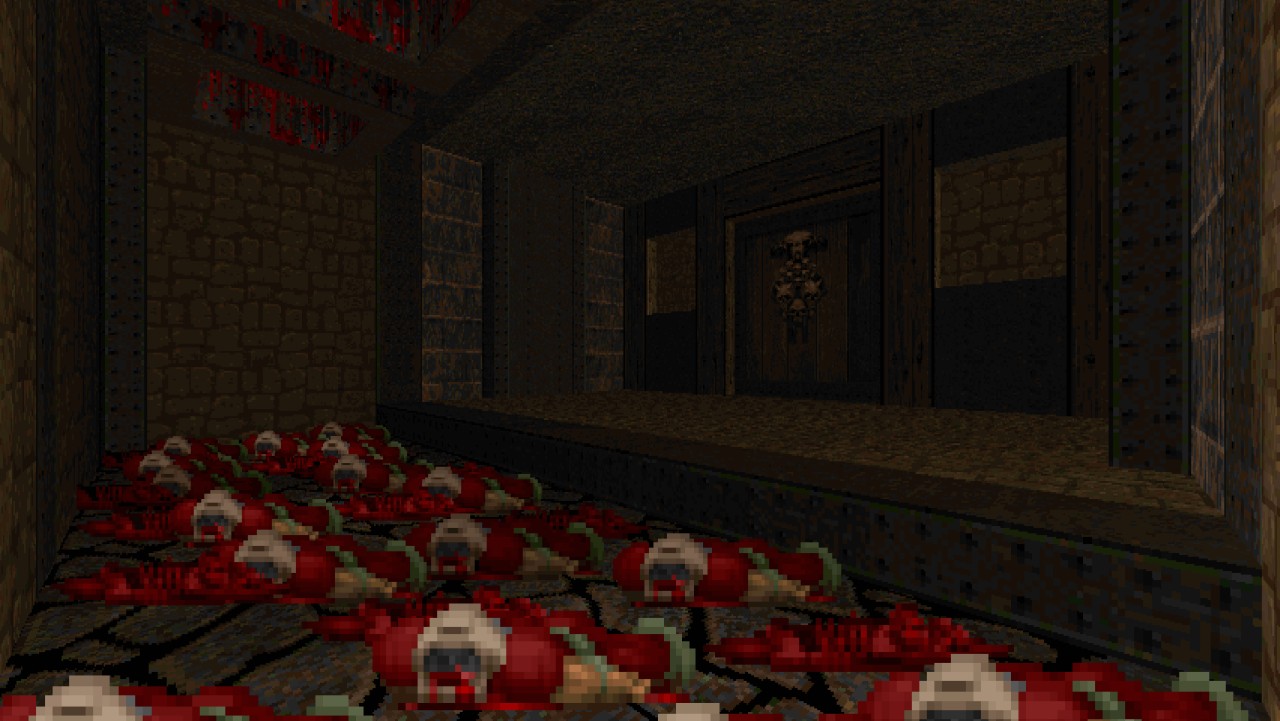
MAP01 positions itself as a soft introduction for curating your expectations before heading into the castle proper because the concepts discovered here will be later expanded upon. Puzzles follow a particular language, taught to you in subtle ways without necessarily hand holding the whole learning process. Gaining any forward momentum took a moment to grasp having to first figure out what type of experience sat in front of me. There is little distance to travel early on and no standard wall switches to tinker with. The only devices to operate with were nine pressure plates without a known solution on hand, while other rooms appear to lack purpose, so became all too clear some out of the box thinking is required. This begins to click into place after taking the time to question why the presentation is depicted in this way and what purpose certain items serve after finding them, to then finding a revelation when my thoughts prove correct. What BLOODSTONE expects from players and their means for solving these conundrums is established as a core part of the level design, a matter of putting clues during each scenario into perspective. In time solutions become easier to notice with few but small twists to shake up the foundation built up along the way.
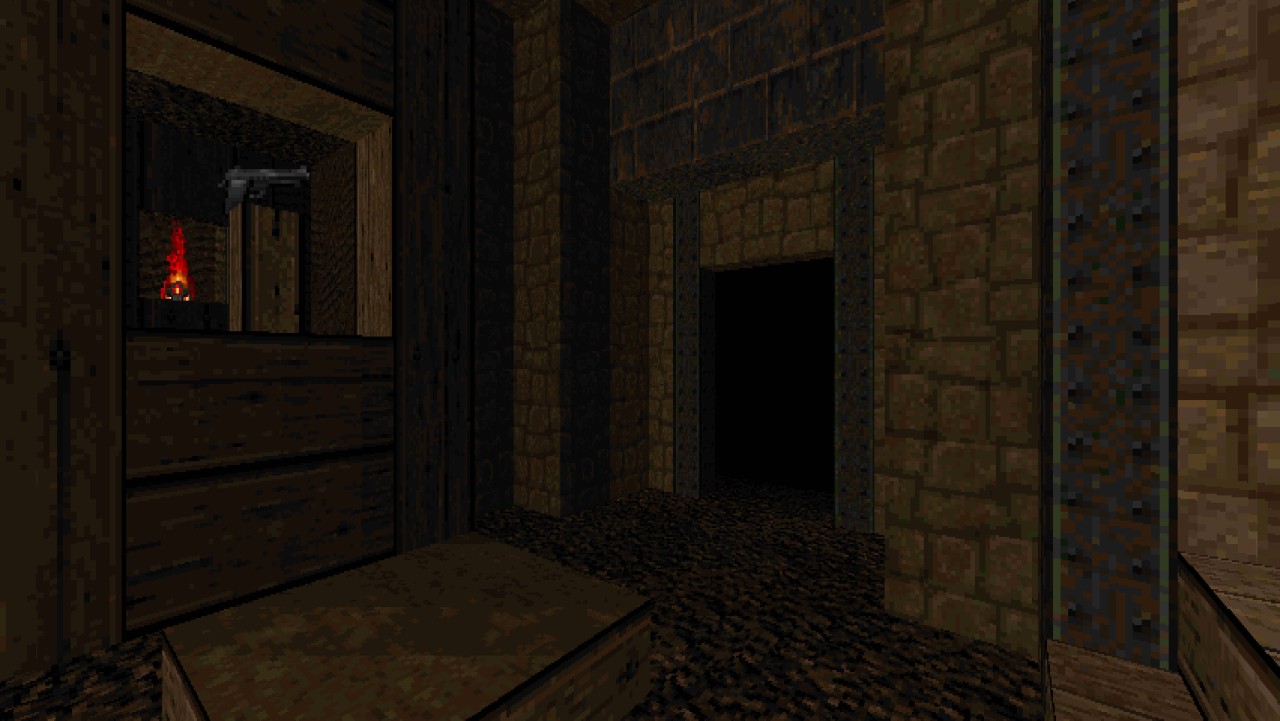
Carrying that same mindset into the next stage, MAP02 by comparison is a free flowing venture with paths that branch away from your starting position to various puzzle chambers scattered about the castle. There’s some degree of freedom where to proceed because of the non-linear layout, should one direction be too daunting, another challenge could be tackled meanwhile until all options are exhausted. Your primary goal here is seeking out a red skull key for what could be a possible exit, a goal that could soon be forgotten once the growing list of tasks increase. You’ll want to be taking note of all the odd curiosities along the way, those with unknown function, or unreachable switches and special items to grab. There’s a consistent incentive to check back on these once their contextualisation is deduced, but return trips never became a hassle due to shortcuts opening up as you explore, connecting all the branches together to make traversal between sections a breeze. Another navigational layer is added by utilising the pistol and rocket launcher as their own specialised tools, gating off some progression until those have been acquired. Finding out how is another cog piece of the map wide mystery, but does place a comfortable marker how much headway has been made for the journey.
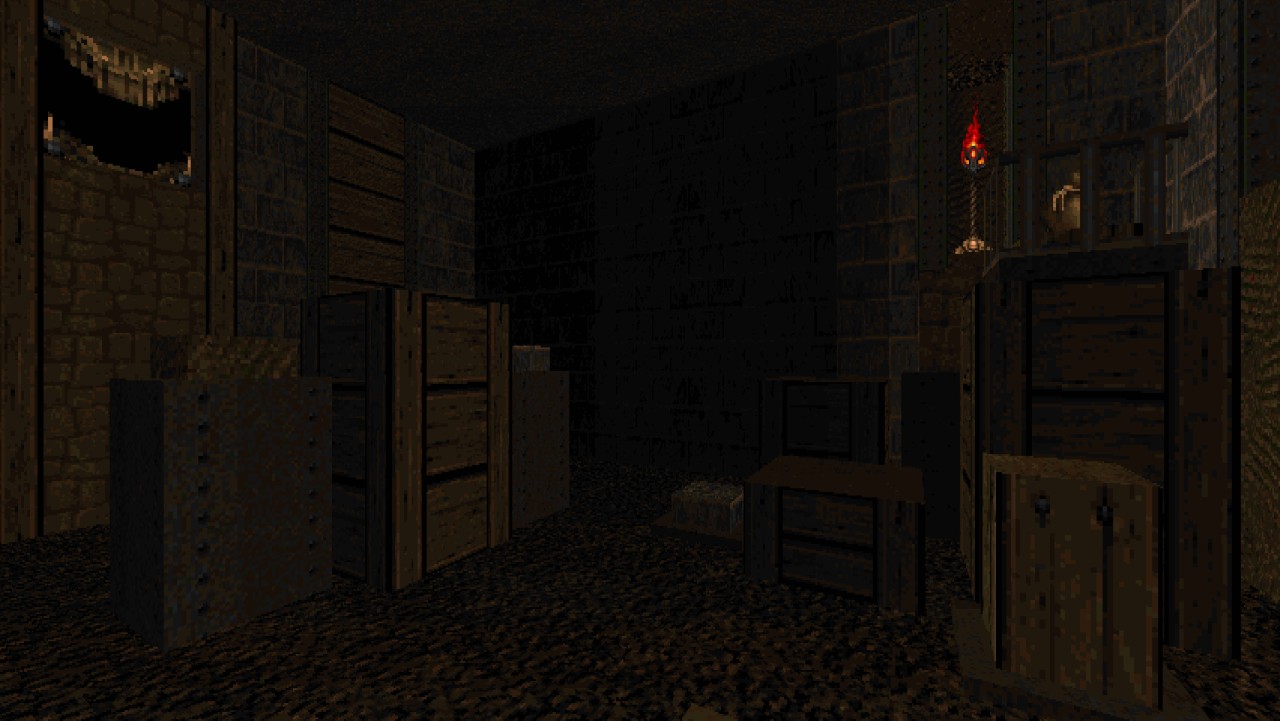
Despite its name, CASTLE BLOODSTONE depicts a dark and gothic setting more akin to a dungeon rather than traditional castle, a forgotten place built deep within the earth and few pockets of outdoor relief under a blood red sky. I couldn’t grasp the full nature of the castle’s abstract sense of place or the purpose it once served. Useful trinkets are hidden away from the well trodden path, invisible walkways bridge gaps and suspect areas are only accessible out of bounds from reality. It really wouldn’t be any stranger to me had you been trapped inside a non-euclidean maze this whole time, if such geometry were possible inside DOOM’s vanilla engine I could easily see these hallways wrapping amongst themselves in impossible ways. Both levels remain centred around their puzzles and the same applies to visual design, using a tight texture palette of stone, wood and natural rock, achieving a clarity so the intended language can be seen by players with minimal interferences.
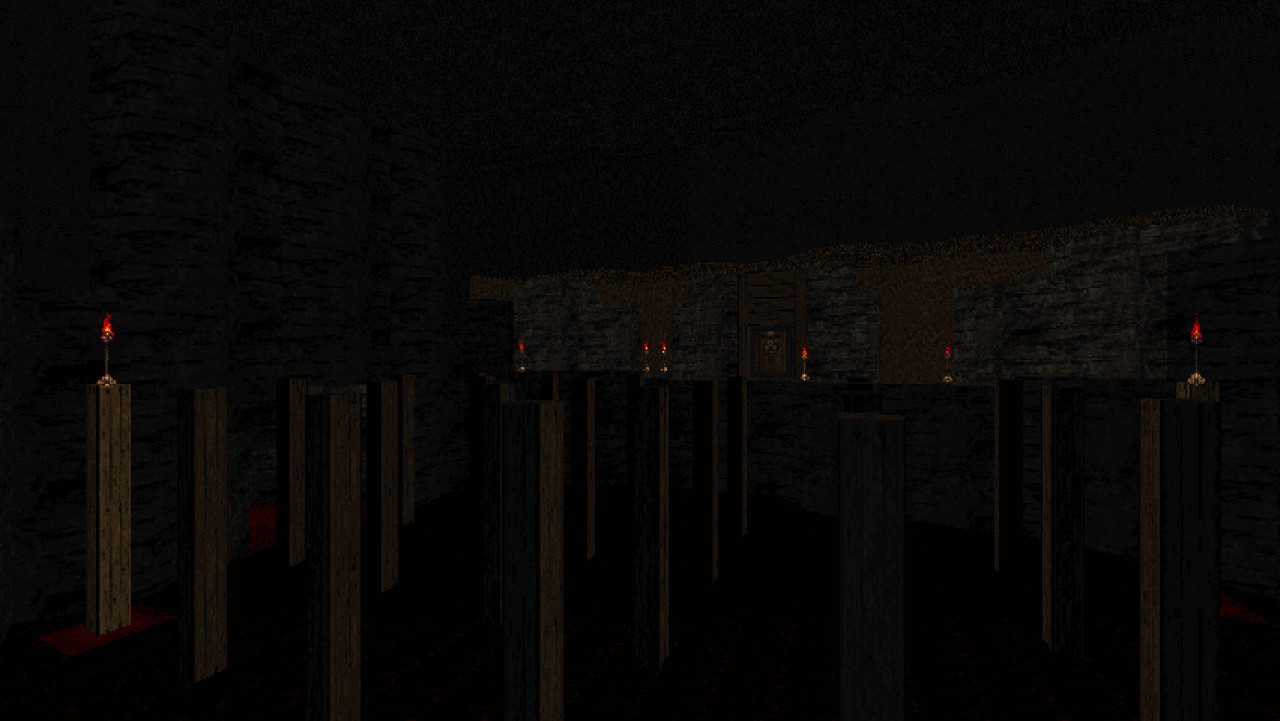
There are good moments of stark contrast though that take advantage of the situation and serve two major purposes. The primary contrast draws the eye to items of importance. For example, it’s hard to ignore those gigantic skull switches amongst the scenery without attempting to interact with at least one of them which will put into question those just out of reach knowing they must function the same. Special puzzle contraptions are also made clear, a second example includes a chamber for raising or lowering uniquely textured platforms. Another room then contains pressure plates to control which type raises or lowers using visual guidance how each trigger will affect the outcome.
The secondary contrast exists for provoking an unsettling mood. Icon of Sin wall motifs are abruptly grafted into the environment, perfectly positioned not to be ignored as you’re walking into a new area. These undesirable murals with blanket stares and grinning teeth don’t naturally fit into the design, as if they exist in response to your presence, being stalked and watched by an unknown entity. Further adding to this macabre is a lack of music, so the silence can be broken up with ambient drones and strange noises, an effect not often utilised in vanilla wads but stands out every time I come across it and in this case helps to maintain unease during the long haul.
Conclusion
As much as I enjoy puzzles that involve logical thinking like a sokuban or brainstorming a Zachtronics game, sometimes I seek out something with adventurous detective work involved where the answers might be in plain sight such as OBRA DINN or a good MYST-like. BLOODSTONE leans much closer to the latter, the only exception being is that initial answers are often the correct path with no further arrangement or hidden meaning to decipher. The experience is more chilled out as the heavy lifting is done for you and just a matter of discovery. As a vanilla DOOM level the mechanics worked surprisingly well in practise, as simple as the concept may first appear, getting the inner workings functional must have been a difficult beast to tame. I respect the craft put on display here.
Free form navigation and an eerie ambience helped to break up the experience, but there were still moments that took a while to click into place such as awkward quirks regarding switch linedefs deeply rooted into the main progression loop. But even this oddity has a small chamber rigged to teach players, whether they know about it or not, as the only means of escape is attempting the effort. I do wonder just how much further these puzzle concepts could be stretched without exploiting more obscure tricks or needing an extended format. Brute forcing certain scenarios using trial and error is also possible, though not a simple issue to prevent while designing puzzles. The blood cavern miniature model then served no purpose in my run because I’d already figured what it was going to tell me, therefore in such circumstances it would have been nice if areas like this also held secrets you otherwise wouldn’t receive by brute force. The wad finale then offers a great tonal shift that caps off the adventure, utilising what you’ve learnt along the way while adding a frantic spice in rhythm to the music track.